


Step by step brand design process: Build a powerful brand
- Pawan Samarakoon
- 4 days ago
- 8 min read

TL;DR:
A structured brand design process prevents costly rebranding and ensures consistency.
Research, strategy, and clear guidelines are essential for effective and lasting branding.
Strategy-focused branding yields better recognition, trust, and revenue growth than visual style alone.
Many small business owners spend thousands on a logo, launch it proudly, then realize six months later it says nothing about who they are. The rebrand follows, and so does the bill. A structured brand design process prevents exactly that. Consistent brand presentation can increase revenue by up to 33%, yet most SMBs skip the foundational steps that make consistency possible. This guide walks you through every stage, from discovery to launch, so you build a brand that works from day one and grows with your business.
Table of Contents
Key Takeaways
Point | Details |
Start with strategy | A solid strategic foundation comes before visuals for lasting brand results. |
Consistency drives growth | Clear brand guidelines can boost revenue and customer trust significantly. |
DIY vs expert help | DIY methods help in the early stages but expert guidance ensures the best long-term outcome. |
Rollout with intent | Plan your internal and external rollout to maintain clarity and momentum. |
Brands evolve | Regular updates keep your brand relevant and aligned with business growth. |
Laying the foundation: Discovery and research
Every strong brand starts with honest answers to uncomfortable questions. Who exactly are you trying to reach? What do your competitors do well, and where do they fall short? What do your current customers actually say about you when you are not in the room? Discovery and research answer all of these, and brand identity research is the recognized starting point of any standard brand process.
Here is what to collect during this phase:
Ideal customer profile: Age, goals, frustrations, and buying behavior
Competitor audit: Logos, messaging, pricing, and perceived positioning
Internal values: What your team believes and how they work
Market gaps: Where competitors are weak or silent
Customer language: The exact words your buyers use to describe their problems
Skipping this step is the single most common reason brands need expensive rework. Without research, you are guessing at positioning, and guessing costs money. Understanding what is branding at this stage helps you frame research correctly, while a solid SME branding checklist keeps you organized throughout.
Pro Tip: Interview at least five current or ideal customers before touching any design tool. Ask them why they chose you, what they almost chose instead, and what word they would use to describe your business. Their answers will shape every decision that follows.
Task | DIY approach | Hiring help |
Customer interviews | Google Forms, phone calls | Brand strategist or researcher |
Competitor audit | Manual review, free tools | Agency with paid analytics tools |
Market gap analysis | Industry blogs, Reddit forums | Consultant with category expertise |
Insight synthesis | Spreadsheet notes | Structured discovery report |
The DIY route works if you have time and discipline. Hiring help accelerates accuracy and often surfaces insights you would miss on your own.
Crafting your brand strategy: Positioning, mission, and values
With research done, you are ready to make key strategic decisions that guide all visuals to follow. This is where most SMBs rush, and it is exactly where slowing down pays off.
Here are three sequential steps to build your brand strategy:
Write your mission statement. One to two sentences that explain what you do, who you serve, and why it matters. Keep it internal and honest, not just marketing copy.
Define your brand values. Choose three to five values that genuinely guide how your team behaves and makes decisions. Vague values like “integrity” only work if you can describe what they look like in practice.
Carve out your market position. Based on your research, identify the one thing you do better or differently than anyone else in your space. That is your positioning anchor.
Brand strategy should always precede visuals. Experts confirm that brands built on clear strategy outperform those built on visual instinct alone. Jumping to design first leads to visuals that look good but communicate nothing specific, and that means expensive rework when the disconnect becomes obvious.
Pro Tip: Use the customer language you collected during research to shape your positioning statement. If your buyers keep saying they feel “overwhelmed by options,” your positioning might be built around simplicity and clarity.
Solid brand positioning is not about being the best in the world. It is about being the obvious choice for a specific group of people.
Strategy is brand logic; visuals express it.
Designing your visual identity: Logo, color palette, and typography
Once your strategy is clear, it is time to translate it into visuals your audience will recognize and remember. Visual identity is not decoration. It is strategy made visible.
The core visual elements you need to create include:
Logo: Primary mark, secondary mark, and icon version for small formats
Color palette: Two to four brand colors with defined hex codes
Typography: One to two font families for headings and body text
Imagery style: Photography or illustration guidelines that match your tone
Supporting elements: Patterns, icons, or textures that reinforce the brand feel
Visual identity design always follows strategy, not the other way around. The standard process confirms this sequence for good reason: visuals built without strategic direction get replaced quickly.
Two traps to avoid at this stage. First, trend-chasing. A logo built around a 2025 design trend will look dated by 2027. Aim for timeless over trendy. Second, complexity. A logo that only looks good at full size will fail on a business card, a social media avatar, or an app icon. Scalability is not optional.
Factor | DIY tools (Canva, Looka) | Hiring a designer |
Upfront cost | Low ($0 to $50/month) | Medium to high ($500 to $5,000+) |
Skill required | Basic to intermediate | None (handled for you) |
Originality | Limited by templates | Fully custom |
Scalability | Often limited | Built for all formats |
Strategic alignment | Depends on your input | Guided by expertise |
DIY tools are a reasonable starting point for very early-stage businesses. Once you are scaling, a professional designer who understands your strategy is a better investment.
Building and enforcing brand guidelines for consistency
Logo, colors, and fonts alone are not enough. Consistency is what translates brand design into real business growth. A brand that looks different on every platform confuses buyers and erodes trust fast.
Here is how to create and enforce brand guidelines that actually get used:
Document visual rules. Define exactly how your logo may and may not be used, which colors appear in which contexts, and which fonts are approved for which applications.
Write messaging guidelines. Describe your brand voice, tone, and the kind of language that fits or does not fit your brand. Include sample phrases and ones to avoid.
Create application examples. Show how the brand looks on a business card, social post, email signature, and website header. Real examples make guidelines usable.
Share them with everyone. Guidelines that live only on your hard drive do nothing. Every team member, contractor, and vendor who touches your brand needs access.
Schedule quarterly reviews. Set a calendar reminder to check that guidelines are still being followed and still reflect your current positioning.
Consistent brand presentation can lift revenue by 23 to 33 percent, which makes this step one of the highest-ROI actions in the entire process. Learn more about why brand guidelines matter and how brand consistency for SMBs builds long-term recognition.

Pro Tip: Store your brand guidelines in a shared Google Drive folder or Notion workspace so every team member can access the latest version instantly. Review the document every quarter and update it when your offerings or audience shift.
Rolling out and evolving your brand
Armed with guidelines, it is time to activate your new brand and ensure it delivers results inside and out. A brand that exists only in a PDF has no value. Activation is where strategy becomes reality.
Internal rollout tasks:
Brief your team on the new brand, its meaning, and how to apply it
Update all internal templates: email signatures, presentations, proposal docs
Replace old logos and colors in any shared files or tools
External rollout tasks:
Refresh your website with the new visual identity and messaging
Update all social media profiles, bios, and cover images
Reprint or redesign any physical materials: business cards, packaging, signage
Notify key clients or partners of the rebrand with a brief explanation
For USA SMBs, scalability matters from day one: early-stage businesses should build a minimum viable identity, while scaling businesses need full brand systems that support teams and multiple channels. Explore branding tips for entrepreneurs and how to align branding and marketing to keep both working together as you grow.
Pro Tip: Set a recurring calendar event every six months to review your brand performance. Look at customer feedback, sales data, and social engagement to spot any gaps between your brand promise and the experience you are actually delivering.
Brands are not static. As your business grows, your audience evolves, and your offerings expand, your brand should grow with them. Iteration is not failure. It is smart management.
A fresh perspective: Why strategy beats style in brand design
Here is something most branding articles will not tell you: style is the easy part. Any competent designer can produce something that looks polished. The hard part, and the part that actually determines whether a brand lasts, is strategic alignment.
We have seen SMBs spend $10,000 on a visual identity that gets replaced within two years because it was never grounded in a clear positioning strategy. We have also seen businesses with modest budgets build brands that outlast their competitors by a decade, simply because every decision connected back to a clear brand logic.
DIY design tools tempt small business owners with fast, affordable results. The risk is not the tool itself. The risk is skipping the thinking that should come before it. Even a simple strategy document, one page outlining your audience, positioning, and values, is enough to keep visuals on track. Explore branding strategies for small businesses to find the right strategic framework for your stage.
Skipping strategy is the most expensive branding mistake. Visually stunning brands without meaning rarely stand the test of time.
Investing in expert strategy, even at a small scale, pays returns for years. Style fades. Strategy compounds.
Need help with brand design? Get professional results
Following a structured brand design process saves you time, money, and the frustration of starting over. But knowing the steps and executing them well are two different things.
At LOOM Brand Designs, we guide SMBs through every stage of this process, from discovery and strategy to visual identity and launch. Whether you are starting from scratch or refreshing an existing brand, our basic branding package gives you a professional foundation built on strategy, not guesswork. Our professional graphic design services ensure every visual element reflects your brand logic and scales with your business. Book a consultation today and build a brand that earns trust and drives growth from day one.
Frequently asked questions
What are the main steps in the brand design process?
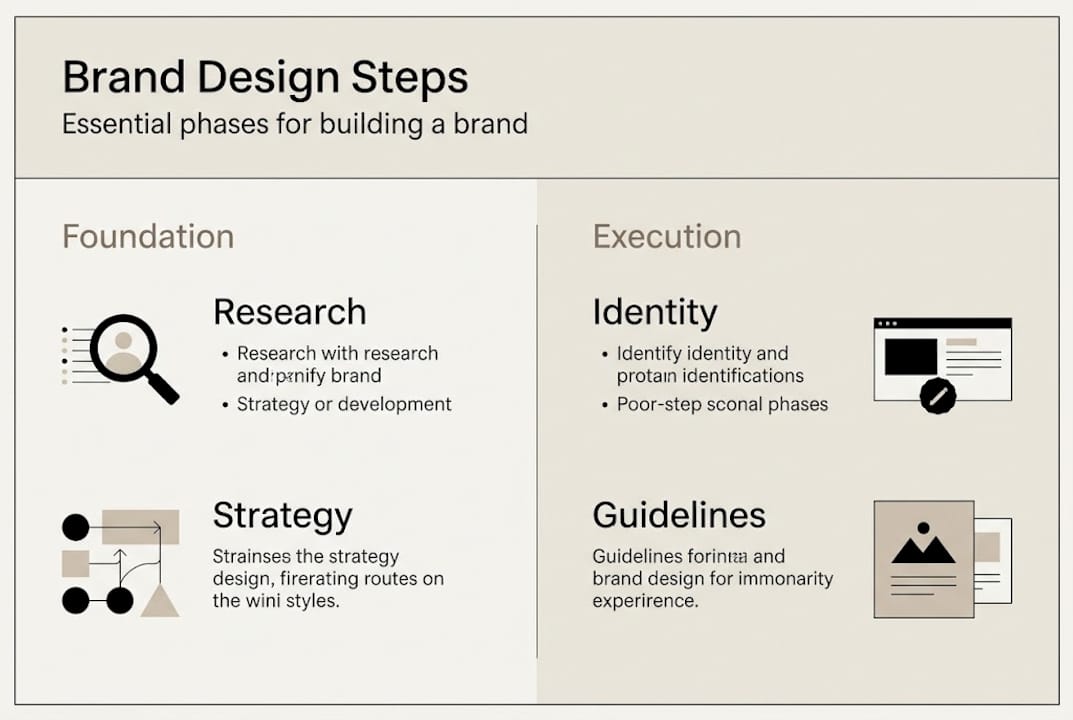
The key steps are discovery and research, crafting a brand strategy, designing your visual identity, building brand guidelines, and launching the brand across all touchpoints.
Why is consistency important in brand design?
Consistent brands can increase revenue by 23 to 33 percent, and they build the kind of recognition that turns first-time buyers into loyal customers.
Can I design my own brand or should I hire an agency?
DIY is workable for early-stage basics, but agencies reduce inconsistency risk and deliver long-term strategic ROI, especially for businesses focused on growth.
How often should I update my brand design?
Review your brand at least once a year, or whenever your business goals, target audience, or core offerings change in a meaningful way.
What results can I expect from a professional brand design process?
Stronger market recognition, improved customer trust, and up to 33 percent higher revenue are realistic outcomes for businesses that follow a structured, strategy-first brand design process.
Recommended
Comments