


Video marketing guide: grow your business in 2026
- Pawan Samarakoon
- Apr 14
- 9 min read

TL;DR:
Video marketing boosts engagement, shares, and conversions more than other digital formats.
Authentic, consistent videos with clear messages outperform expensive, polished productions.
Focus on one or two platforms and repurpose content to maximize reach and effectiveness.
Video content is no longer optional for businesses that want to grow. It now outperforms nearly every other digital format in engagement, shares, and conversions, yet most small business owners still assume it requires a Hollywood budget or a full production crew. That assumption is costing you customers. Video marketing is the strategic use of video content to promote products, services, or brands, and it’s more accessible than ever. Whether you run a local service business or an e-commerce store, this guide will walk you through everything you need to use video marketing to build your brand and grow your customer base.
Table of Contents
Key Takeaways
Point | Details |
Video marketing defined | It is the use of video content to promote brands, engage audiences, and drive growth for businesses of all sizes. |
Boost engagement and conversions | Video consistently delivers higher engagement and conversion rates than most other content formats. |
Choose the right platforms | Focus your video marketing on the platforms where your audience is most active for maximum impact. |
Start small, think big | Effective videos can be created on any budget using storytelling, authenticity, and basic tools. |
Defining video marketing for modern businesses
Let’s clear up what video marketing actually means before we talk strategy. At its core, video marketing is the strategic use of video content to promote products, services, or brands, aiming to attract, engage, and convert audiences. It’s not just running ads. It covers every video touchpoint your business creates, from a 30-second Instagram Reel to a detailed product walkthrough on your website.
For small and medium-sized businesses, understanding the different video types is a practical first step. Each type serves a different purpose:
Explainer videos break down what your product or service does and why it matters
Testimonial videos feature real customers sharing their experience, building trust instantly
Promo videos highlight a specific offer, event, or product launch
How-to videos teach your audience something useful, positioning you as an expert
Behind-the-scenes videos humanize your brand and show the people behind the business
Knowing which type to use depends entirely on your current business goal. If you’re launching something new, a promo video makes sense. If you’re trying to build credibility, testimonials are your best asset.
Video marketing serves three primary objectives that align with how customers actually move through a buying decision:
Objective | What it does | Best video type |
Brand awareness | Introduces your business to new audiences | Promo, behind-the-scenes |
Lead generation | Captures interest and drives action | Explainer, how-to |
Conversions | Pushes warm leads to buy | Testimonial, product demo |
Think of these objectives as stages. A first-time viewer needs awareness content. A returning visitor who’s already interested needs a testimonial or demo to push them over the line. Building a video strategy around these stages is one of the most important shifts you can make in your digital marketing basics.
“The businesses that win with video aren’t the ones with the biggest budgets. They’re the ones who understand their audience and show up consistently.”
That mindset is the foundation of everything else in this guide.
How video marketing drives brand engagement and growth
With a firm definition in place, it’s crucial to understand how video marketing impacts customer engagement and real business growth. Video content earns more attention and gets shared more often than static images or text posts. Video marketing attracts, engages, and converts audiences through platforms like social media, websites, and email, making it one of the most versatile tools in your marketing mix.
Here’s a direct comparison of how video stacks up against other content types:
Content type | Average engagement | Share rate | Conversion impact |
Video | High | Very high | Strong |
Blog post | Medium | Medium | Moderate |
Static image | Medium | Low to medium | Low to moderate |
Email text only | Low | Low | Low |
The numbers tell a clear story. Video holds attention longer, gets shared more widely, and converts better than most alternatives. For a small business trying to boost brand recognition without a massive ad spend, that efficiency matters enormously.
Here’s a simple process to start using video for real growth:
Set one clear goal for each video before you shoot anything. More views? More calls? More sign-ups?
Choose your platform based on where your customers already spend time (more on this in the next section)
Create a short script or outline so your message stays focused and doesn’t ramble
Include a specific call to action at the end of every video, even if it’s just “visit our website”
Post consistently rather than sporadically. One video per week beats five videos in one month and then silence
Pro Tip: Add captions to every video you post. A large portion of social media users watch videos with the sound off, especially on mobile. Captions keep them engaged and make your content more accessible.
When you apply these digital marketing tactics consistently, video becomes a reliable engine for traffic, leads, and sales rather than a one-off experiment.
Top video marketing platforms and where your audience is
Once you’ve seen the impact of video marketing, it’s time to pick the right platforms where your efforts will pay off. Not every platform suits every business, and spreading yourself too thin early on is one of the most common mistakes we see. Video marketing is executed through platforms like social media, websites, and email, so your job is to figure out which channel your specific audience actually uses.
Here’s a breakdown of the major platforms and who they work best for:
YouTube is the second largest search engine in the world. It’s ideal for how-to content, product demos, and any video you want to rank in Google search results. Best for businesses targeting broad audiences or those with longer-form content
Instagram (Reels and Stories) works well for visually driven brands, local businesses, and companies targeting consumers aged 18 to 44. Short, punchy content performs best here
TikTok skews younger but is growing fast across age groups. It rewards authenticity over polish, which is great news for small businesses without big production budgets
Facebook remains strong for community-focused businesses and local service providers. Facebook video ads also offer powerful targeting options for reaching specific demographics
LinkedIn is the go-to for B2B businesses. If your customers are other business owners or professionals, LinkedIn video gets strong organic reach compared to most other content types
Your own website should never be overlooked. Embedding video on landing pages and product pages can significantly increase the time visitors spend on your site
If you’re just getting started, pick one or two platforms and focus there. Trying to be everywhere at once dilutes your effort and makes it harder to build momentum. Staying current with digital marketing trends will also help you spot which platforms are gaining traction with your specific audience.
Pro Tip: Film one piece of core video content and repurpose it across platforms. A 3-minute YouTube video can become a 60-second Instagram Reel, a Facebook clip, and a LinkedIn post. You create once and distribute many times, which saves time and maximizes reach. A solid strategy for business growth always includes this kind of content efficiency.

Best practices: Creating compelling business videos
Now that you know where to post, let’s ensure the videos you share are as effective and engaging as possible. The good news is that production value matters far less than most people think. What actually drives results is clarity, relevance, and a clear call to action.
Here’s a step-by-step process for creating videos that work, even on a tight budget:
Start with your audience’s problem. Every great business video answers a question or solves a pain point your customer already has. Don’t start with your product. Start with their problem
Write a simple script. You don’t need a Hollywood screenplay. A three-part structure works: hook (grab attention in the first 3 seconds), value (deliver the main point clearly), and call to action (tell them exactly what to do next)
Use what you have. A modern smartphone shoots excellent video. Natural light near a window beats expensive lighting in most cases. A free tool like CapCut or DaVinci Resolve handles editing without any cost
Keep it short. For social media, aim for 60 to 90 seconds. For YouTube or your website, 2 to 5 minutes is a sweet spot for most business content
Add your branding. Include your logo, consistent colors, and a recognizable visual style. This is where improve engagement with design principles come into play and make a real difference in how professional your videos feel
Here are the most common pitfalls to avoid:
No clear call to action. Every video needs one. Even “follow us for more tips” counts
Trying to cover too much. One video, one message. Cramming in five points dilutes all of them
Ignoring thumbnails. On YouTube and Facebook, a compelling thumbnail is what gets the click. Treat it like a mini ad
Pro Tip: Record a short testimonial from your best customer using nothing but their smartphone. Send them three simple questions in advance. Authentic, slightly imperfect testimonials often engage and convert audiences better than polished studio productions because they feel real.
Why most small businesses underestimate video marketing’s ROI
Here’s something we’ve seen repeatedly: small businesses obsess over production quality and completely ignore the story they’re telling. They invest in cameras, lighting, and editing software, then produce videos that look great but say nothing meaningful to their audience. That’s a guaranteed way to get views without results.
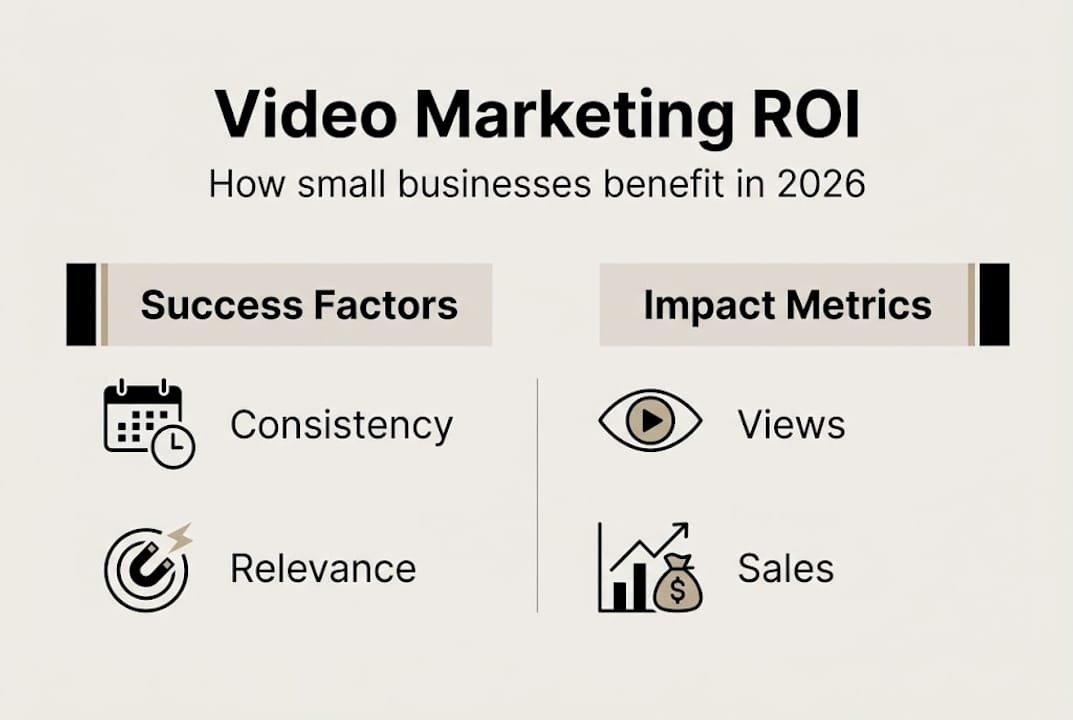
Real ROI from video comes from consistency and relevance, not from looking like a Fortune 500 company. A business owner filming a 90-second weekly tip on their phone, speaking directly to their customers’ biggest frustrations, will outperform a beautifully produced video that’s vague and brand-focused every single time. We’ve seen this play out across dozens of small business clients.
The other misconception is that ROI from video is hard to measure. It isn’t. Track views, click-through rates, time on page, and actual conversions. If you’re focused on improving marketing ROI, video gives you clear data points at every stage of the customer journey. Stop waiting until your budget is bigger or your setup is perfect. Start now, stay consistent, and let the data guide your improvements.
Level up your brand with expert video marketing support
Video marketing works. But knowing the strategy and executing it consistently are two very different things. If you’re ready to stop guessing and start seeing real results, professional support can make the difference between sporadic content and a system that actually grows your business.

At LOOM Brand Designs, our video editing and design services are built specifically for businesses like yours. We handle the creative heavy lifting so you can focus on running your business. Whether you’re starting from scratch or want to sharpen an existing strategy, our basic branding packages give you a strong visual foundation to build on. Explore the full range of brand marketing solutions we offer and take the next step toward video content that actually converts.
Frequently asked questions
What is video marketing and why is it important?
Video marketing is the strategic use of video content to promote your business, increase engagement, and drive sales by connecting with your audience online. It’s important because video consistently outperforms other content types in attention, shares, and conversions across digital channels.
Does video marketing only work for big companies?
No. Video marketing is effective for businesses of all sizes on social media, websites, and email, and small businesses often benefit most because authentic, low-budget content resonates strongly with audiences. The right strategy matters far more than the size of your production budget.
How can I start video marketing if I have a tight budget?
Begin with simple explainer or testimonial videos using your smartphone and leverage free editing tools like CapCut or DaVinci Resolve to keep costs low. Consistency and a clear message will deliver results faster than expensive equipment.
Which platform is best for my business videos?
Choose the platform where your target audience spends the most time. Video marketing leverages platforms such as social media, websites, and email, so YouTube works well for broad audiences while Instagram suits younger or visually driven demographics.
How do I measure success with video marketing?
Track metrics like views, engagement rates, website traffic, and conversions to evaluate your campaign’s impact. Comparing these numbers month over month will show you what’s working and where to focus next.
Recommended
Comments