

TL;DR:
- A strong digital presence covers your website, SEO, social media, reviews and email marketing.
- Consistent, authentic branding builds trust and a competitive edge online.
- Getting your owned channels right and using AI tools sensibly can do a lot for small business growth.
Many small business owners assume online competition is rigged in favour of big brands with big budgets. It is not, and believing it costs them customers. Digital presence is the sum of every way people find, experience and trust your business online: your website, search rankings, social profiles, reviews and content. A well-built presence levels the field in ways that were not possible a few years ago. This guide covers what digital presence means, why it matters for growth, what it is made of and how to improve yours.
Key takeaways
| Point | Details |
|---|---|
| Joined-up digital presence | Success comes from bringing your website, branding, SEO, social media and reviews together into one coherent whole. |
| Own your channels | Build a good website and an email list before relying on social platforms. |
| Use new tools | Sensible use of AI and automation can extend your reach and save time. |
| Authenticity wins trust | Customer stories and genuine content connect better than over-polished ads. |
What is digital presence? Definition and framework
Digital presence is more than a website. It is the whole footprint your business leaves online: your reputation, visibility and voice working as one connected system. When someone searches your business name, checks your reviews, scrolls past your social post or clicks your ad, they are meeting your digital presence.
The core elements:
- Website: Your owned home base for everything you do online
- Social media profiles: Where you engage and build community
- Search visibility (SEO): How easily people find you on Google
- Content: Blog posts, videos and resources that build authority
- Online reviews: Social proof that builds or breaks trust
- Email list: A direct channel to customers that you own
Here is what many people miss. Owned channels like your website and email list are worth far more than a presence that exists only on social media. Platforms can change their algorithms overnight. Your website and email list belong to you. Understanding digital branding basics shows why building on owned channels first is the smarter long-term move.
| Element | Primary goal |
|---|---|
| Website | Turn visitors into customers |
| Social media | Build awareness and engagement |
| SEO | Drive organic, long-term traffic |
| Email marketing | Keep and nurture existing customers |
| Online reviews | Build trust and influence decisions |
| Paid ads | Generate fast, targeted traffic |
A good guide to digital marketing shows how these elements connect. In a 2026 SBE Council survey of US small businesses, 74% said digital platforms make it easier to compete with larger firms. The businesses doing well are not necessarily spending more. They are showing up more intelligently.
Pro tip: Authenticity beats polish. A real photo of your team or a genuine customer story will usually do better than a perfectly designed stock-image post. People connect with people, not logos.
Why digital presence matters for small businesses
With the definition in place, here is why building your digital presence is worth the time and money. The benefits go well beyond being visible.
A strong digital presence drives three things: discovery, trust and sales. When customers search for what you offer, you need to appear. When they find you, your reputation decides whether they get in touch or click away. When they are ready to buy, your website has to close the deal.
The same SBE Council survey found that the business website is the largest single source of revenue for small businesses, with other digital and ecommerce channels making up a median 20% of sales.
That should change how you think about your website. It is not a digital business card. It is your best salesperson, working around the clock.
What a strong digital presence does for you:
- Makes you easier to find, so new customers reach you before competitors
- Builds credibility through consistent branding, reviews and good content
- Drives conversions by guiding visitors towards a clear action
- Supports retention through email and social engagement
- Protects your reputation by giving you a say in your online story
Research on the impact of online reputation management in the Journal of Small Business Strategy links reviews to small business performance. A bad review left unanswered can put people off, while a strong review shared on your site and social channels can do the opposite.
See small business growth strategies for how businesses turn digital channels into steady revenue, and digital tactics for business growth for specific ideas to act on.
Pro tip: Do not leave your reviews only on Google. Put your best testimonials on your homepage and product pages. Social proof where people are deciding shortens the time it takes to earn their trust.
Core components of a strong digital presence
These are the building blocks that set strong businesses apart online. They are not optional extras. They are the foundation.
Brand identity is where everything starts. Your logo, colours, tone of voice and visual style must be consistent everywhere. Inconsistency confuses people, and confused people do not buy.
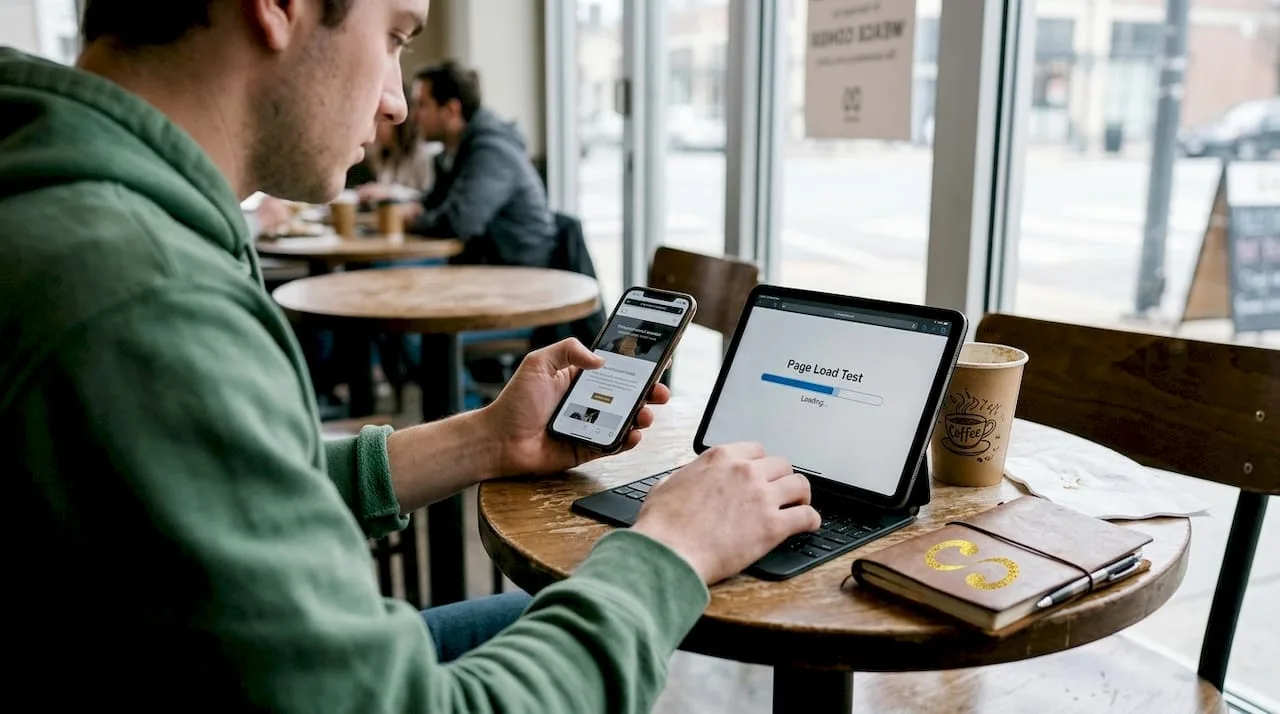
A mobile-friendly website is essential. A large share of web traffic comes from phones, and if your site loads slowly or looks broken on one, visitors leave in seconds.
SEO (search engine optimisation) is how you earn free traffic from Google. It means using the right keywords, earning backlinks and publishing content that answers the questions your customers are asking.
Social media engagement keeps your brand front of mind. You do not need to be everywhere. Pick one or two platforms where your customers actually spend time and show up consistently.
Reputation management means monitoring and replying to reviews. Treat branding, website, SEO, social and reviews as one connected system rather than separate jobs.
| Channel | What it does best |
|---|---|
| Website | Converts and informs |
| Social media | Builds community and awareness |
| Retains and nurtures | |
| Paid ads | Drives fast, targeted traffic |
| Reviews | Establishes trust and credibility |
A quick audit you can do today:
- Search your business name and look at what appears
- Check your website on a phone for speed and ease of use
- Review your social profiles for consistent branding and activity
- Count your online reviews and read the latest ones
- Test your contact form or booking system to make sure it works
If you are ready to go further, AI in digital marketing is changing how small businesses compete. If you would rather have it done for you, our social media and SEO set-up gets your foundation built properly.
How to strengthen your digital presence: proven strategies
You know what goes into a strong digital presence. Here is how to improve yours in 2026.
The biggest mistake small business owners make is chasing new platforms before mastering the ones they have. Start with your owned channels. Get your website converting. Build your email list. Then expand.
When branding, content, web design and reviews work together, the effect compounds. A blog post brings in search traffic. That traffic reads your reviews. The reviews build trust. Trust leads to a purchase. Each element feeds the next.
AI tools speed this up. The SBE Council survey found that 82% of US small business employers have adopted at least one AI tool. From drafting content to automating follow-up emails, AI clears the bottlenecks that slow small teams down. Try a few tools and keep the ones that fit how you work.
Quick wins you can act on now:
- Update your Google Business Profile with current hours, photos and services
- Add a clear call to action to every page of your website
- Reply to every review, positive and negative, within 48 hours
- Post one piece of original content a week on your main social channel
- Set up a simple welcome email sequence for new subscribers or customers
- Run a basic keyword check to see which terms your customers search for
Keep up with digital marketing trends 2026 so platform changes do not catch you out. If personalisation is on your list, AI-powered personalisation is one of the most effective moves open to small businesses right now.
Pro tip: Genuine, home-made videos and real customer stories often do better than polished ad creative. Get your phone out, film a 60-second walkthrough of your product or service and post it.
Why digital presence isn't just about technology
The businesses that struggle online are rarely short of tools. They struggle because they chase channels instead of building coherence.
We have seen businesses with active TikTok accounts, paid ads running and a freshly redesigned website still lose to competitors with a simpler, more consistent approach. Their messaging was scattered. Their brand looked different on every platform. Their website said one thing and their social media another.
Digital presence is not a technology problem. It is a clarity problem. When your brand voice, visual identity and customer promise line up everywhere, trust follows. People feel it even if they cannot name it.
The businesses doing well online in 2026 put real branding before reach. They know who they serve, what they stand for and how they want customers to feel. Then they use technology to amplify that clarity, not replace it.
Authenticity and consistency are not buzzwords. They are an advantage no algorithm change can take away.
Ready to grow your digital presence with expert help?
Putting this into practice takes strategy, consistency and the right team. If you are ready to stop guessing and build a digital presence that brings in results, LOOM Brand Designs is here to help.
We work with small and medium-sized businesses to build brands that get noticed and websites that convert. From website design & development to SEO and social media set-up, we handle the execution so you can focus on running the business. Let's build something that works for you for the long term.
Frequently asked questions
What does digital presence mean for a small business?
All the ways customers find and interact with your business online, from your website and social profiles to reviews, search results and digital ads. It is your complete online footprint, and every part of it shapes how customers see and choose you.
What are the most important elements of digital presence?
A professional website, search visibility through SEO, active social media, consistent branding and strong online reviews. They work best when you manage them as one connected system rather than one at a time.
How does a digital presence affect revenue for small businesses?
A stronger digital presence brings more people to you and makes it easier for them to buy. In the 2026 SBE Council survey of US small businesses, the website was the largest single revenue source, with other digital and ecommerce channels accounting for a median 20% of sales.
Should small businesses use AI tools to build their digital presence?
Yes, used sensibly. Most small businesses in the SBE Council survey had already adopted at least one AI tool, and AI is useful for drafting content, customer communication and marketing automation. Keep a person reviewing anything that goes out under your name.
The Hashtag Loom