

Many small business owners spend heavily on social media, websites and digital ads and still struggle to grow. Often the problem is a basic misunderstanding: having an online presence is not the same as having a digital brand. When the strategy is unclear and the messaging changes from channel to channel, the money spent on marketing works much less hard. This guide explains what digital branding means, why it matters for your bottom line, and how to build a brand identity that earns recognition, trust and steady revenue on every digital channel.
Key takeaways
| Point | Details |
|---|---|
| Branding as strategy | Digital branding is a strategic framework that shapes how people see you at every digital touchpoint, not just a logo. |
| Core branding elements | Visual consistency, brand voice, user experience and audience targeting work together to build recognition and trust. |
| Consistency pays | A consistent brand makes you easier to recognise and trust than a fragmented one. |
| Channel choice | Owned channels such as email and SEO keep paying back over time, while paid social stops when the spending stops. |
Understanding digital branding: definition and core elements
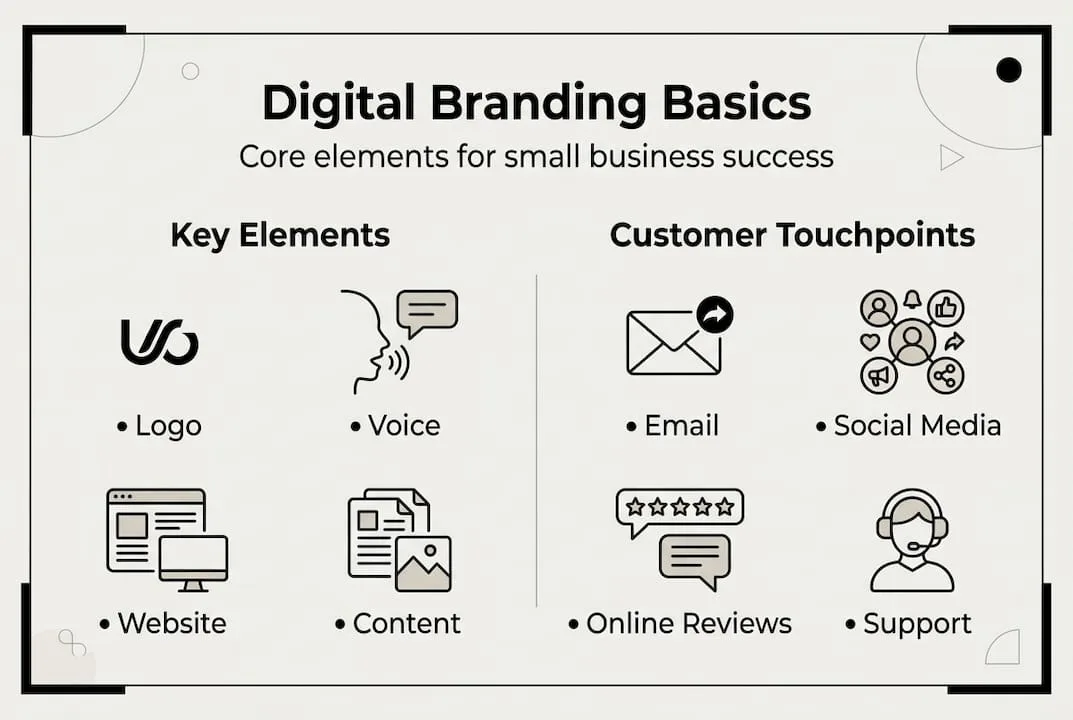
Digital branding is the strategic process of creating and maintaining a cohesive brand identity across your website, social media, email, search results and every other digital touchpoint where customers meet your business. Traditional branding is tied to physical materials. Digital branding runs across connected channels where customers expect a smooth, recognisable experience.
Four core elements make digital branding work:
- Visual consistency: Logos, colours, typography and imagery that stay the same on every platform create instant recognition. Whether someone sees your Instagram post, newsletter or website, they should know straight away it is you.
- Brand voice: The personality and tone of your writing, from formal and authoritative to casual and friendly. It should feel the same in your blog, your social posts and your customer service replies.
- User experience: How people use your digital properties matters as much as what they see. Navigation, page speed, mobile responsiveness and intuitive design all signal professionalism and care for the customer.
- Audience targeting: A clear understanding of who you serve and what they value lets you write messages that land. Generic content fails; content that speaks to real customer problems builds connection.
Together, these set you apart from competitors. When a prospect is comparing five similar providers, strong digital branding is what makes you memorable. It turns casual browsers into interested prospects by building trust before any sales conversation starts. Mastering graphic design fundamentals strengthens this visual foundation.
Digital branding is not only the marketing team's job. Every customer interaction, from an automated email to a reply on social media, either strengthens or weakens your brand. That needs the whole organisation to agree on its core values and apply them consistently.
Why digital branding matters: business impact
The business case is straightforward. Customers pay more for brands they recognise and trust, and they come back more often. A consistent brand builds that recognition faster than a fragmented one, because every touchpoint reinforces the same impression.
Digital marketing pays off when it is done well, but the return varies a great deal by channel and strategy. Owned channels such as email and SEO tend to give the best long-term value, while paid social is better for quick reach than sustained growth.
| Channel type | Typical strength | Best use case |
|---|---|---|
| Email marketing | Strong, owned and repeatable | Customer retention and nurturing |
| SEO | Builds over time | Long-term organic traffic growth |
| Content marketing | Builds authority | Authority building and education |
| Social media ads | Fast but rented | Awareness and quick conversions |
| Display advertising | Wide reach, low intent | Retargeting and brand visibility |
Small businesses are putting more of their marketing budgets into digital, and that reflects where customers spend their time and make decisions. Your prospects research online, compare options through search and social media, and form opinions about you before they ever get in touch.
The businesses that get good returns have a few things in common. They settle their brand strategy before choosing tactics, stay consistent across channels, and focus on media they own rather than renting attention through ads alone. A comprehensive digital marketing approach balances these elements.
Pro Tip: Prioritise owned channels such as your website, email list and organic search over paid advertising. They grow in value over time, while paid channels need constant spending to keep working.
Underinvestment is another common problem. Many entrepreneurs spend very little on marketing, and digital branding suffers most because it needs steady content, design work and channel management to build momentum.
Common pitfalls and expert insights in digital branding
Knowing why small businesses struggle with digital marketing shows the way forward. Three problems come up again and again:
- No clear strategy: Jumping into social posting or Google Ads without defining the audience, positioning or success measures wastes money and produces scattered results.
- Inconsistent messaging: When your website says one thing, your social media another and your emails a third, customers get mixed signals that erode trust and recognition.
- Unfocused targeting: Trying to appeal to everyone means appealing to no one. Broad, generic messages do not connect with specific customer problems and motivations.
Strategic misunderstandings make it worse. Many owners measure success by reach and impressions alone and overlook brand capital: the customer perception, loyalty and preference your business has built up. A company with strong brand capital can charge more, gets recommended by its customers and copes with competition far better than one with the same market share and a weak brand.
"Success requires prioritising brand capital over mere market penetration, focusing on customer perception and loyalty rather than just visibility metrics."
A consistent user experience matters just as much. Customers form impressions from every interaction, from website speed to email formatting to how quickly you reply on social media. A beautiful website counts for little if your newsletters look amateurish or your social accounts look abandoned.

Leaning too hard on paid social is another common mistake. It gives quick visibility, but algorithm changes and rising costs make it a shaky foundation. Businesses built mainly on rented attention have to keep spending just to stand still. Owned channels give you stability and returns that build over time.
Plan for problems too. One badly handled complaint that spreads, or one ill-judged post, can damage a reputation that took years to build. Clear response procedures, team members who understand the brand voice and monitoring that catches issues early all protect your brand.
AI tools save time but need human oversight. AI-written content that does not match your brand voice confuses customers and weakens your identity. Use these tools to support people and speed up production, not to replace the strategic thinking that makes branding work. Your overall branding strategy should guide which tools you use and how.
Practical steps for entrepreneurs to build effective digital branding
Effective digital branding does not need a huge budget or specialist knowledge. It needs clear thinking and consistent execution. Here is how to start:
- Create detailed audience personas: Write down your ideal customers' demographics, challenges, goals and online habits. Where do they spend time online? What problems keep them up at night? What stops them buying? Specific personas guide every branding decision.
- Write a brand style guide: Record logo usage, your colour palette with hex codes, typography, image style and tone of voice. It keeps things consistent as team members change or you bring in contractors.
- Master one channel before expanding: Pick the platform where your audience is most active. Build a strong presence there before spreading yourself across several. Depth beats breadth early on.
- Keep digital assets in one place: Store logos, images, templates and brand documents in shared cloud storage. Version control stops out-of-date materials circulating.
- Set up analytics tracking: Use Google Analytics, social media insights and email metrics to see what is working. Look past follower counts to engagement, conversion rates and customer acquisition costs.
- Schedule regular brand audits: Quarterly reviews of your website, social profiles, email templates and other touchpoints catch inconsistencies and show where to improve.
Planning matters. A systematic review of how small businesses build their brands stresses that SMEs need to focus their limited resources carefully, which is far easier with a plan than with ad hoc activity. Your plan should cover budget, a content calendar, campaign timelines and clear success measures for each activity.
Free and affordable tools make professional branding accessible:
- Canva: Templates and brand kit features keep social media, presentations and marketing materials visually consistent
- Google Analytics: Tracks website performance and user behaviour to inform branding decisions
- Mailchimp or similar: Email platforms with template builders keep messages consistent
- Hootsuite or Buffer: Scheduling tools help you post regularly and consistently
- Grammarly: Keeps written content polished and the tone consistent
Understanding the complete visual branding process helps whether you do the work yourself or with a partner. Many entrepreneurs also benefit from streamlined marketing workflows that save time without lowering quality.
Pro Tip: Put most of your digital marketing budget into owned channels such as SEO, email marketing and content. They gain value over time, unlike paid advertising, which stops working the moment you stop paying.
How you split the budget matters. The right amount varies by industry and growth stage, but growth-minded small businesses treat marketing as a proper investment. Balance short-term lead generation with longer-term brand building. The businesses that do well invest in both, knowing that brand equity builds up while campaigns deliver results now.
Why partner with LOOM Brand Designs for your digital branding needs
Some entrepreneurs build their digital brand in-house, but many find a professional partner gets results faster and with less stress. LOOM Brand Designs offers packages designed around small business budgets and growth stages, from basic branding packages to fuller solutions.
We start by understanding your audience, your competitors and your business goals. Then we build a brand identity that works on every digital channel, from website design and development to social media and search. Because it is joined up, every customer touchpoint reinforces your brand instead of muddying it.
What a professional partner brings:
- Expert guidance that avoids the costly trial and error of most DIY efforts
- Consistent, professional execution across all channels from day one
- Strategy that ties branding to your growth goals
- Design and technical skills most small businesses do not have in-house
- Ongoing improvements based on performance data and market changes
Our social media setup and SEO services build on your branding foundations with hands-on execution. We handle the technical side while you run your business.
Pro Tip: Investing in professional brand design early saves the rebranding costs and lost momentum that come from patchy early efforts. The fastest-growing businesses treat branding as infrastructure, not decoration.
Frequently asked questions
What exactly is digital branding?
Digital branding is the strategic process of building and maintaining a consistent brand identity across all online channels, including your website, social media, email, search results and digital advertising. It covers visual elements, messaging, user experience and the overall impression customers form through digital interactions.
How does digital branding differ from traditional branding?
Traditional branding focuses on physical touchpoints such as print, signage and in-person experiences. Digital branding runs across connected online channels where customers expect fast, personalised and consistent experiences. Digital also lets you measure and improve in real time, which traditional media cannot.
What budget should small businesses allocate to digital branding?
It depends on your industry, growth stage and goals, but treat marketing as an investment rather than whatever is left over. Within your digital spend, prioritise owned media such as your website, SEO and content over paid advertising for lasting returns. Get your foundational branding right before scaling campaigns.
How do I measure digital branding success?
Track numbers such as website traffic, conversion rates, email engagement and customer acquisition costs, alongside qualitative signs like branded search volume, social media sentiment and themes in customer feedback. Understanding various branding strategies helps you pick the right measures for your approach. Strong brands show rising direct traffic, higher conversion rates and better customer lifetime value over time.
What tools do I need for effective digital branding?
Start with free or low-cost essentials: Canva for design consistency, Google Analytics for tracking, an email platform such as Mailchimp, a scheduling tool such as Buffer, and project management software to coordinate the work. Add premium tools as you grow, but strong branding depends more on strategy and consistency than on expensive software.
Can I build digital branding myself or should I hire professionals?
Many entrepreneurs build their first brand in-house with the tools available. A professional partner usually speeds things up, avoids expensive mistakes and frees your time for the business. Weigh your budget, timeline, in-house skills and the cost of your own time. A mix, where you handle some elements and outsource the specialist work, often works best.
The Hashtag Loom