

TL;DR:
- Ecommerce SEO improves an online store's visibility by optimising product pages and site structure for searches made by people ready to buy. It uses structured data and buyer-intent keyword research to turn organic traffic into sales, and it keeps paying back long after paid ads would have stopped. Getting it right takes a sound technical foundation, clear site architecture and steady improvement to content and performance.
Ecommerce SEO is the work of optimising an online store's pages, structure and content so search engines rank it higher and shoppers with real intent find it without paid ads. Unlike broad content marketing, it targets people already searching for the products you sell, which makes organic search one of the strongest channels an online retailer has. Google Search Console, structured data markup and buyer-intent keyword research are the core tools. Done well, ecommerce SEO turns your product catalogue into a sales channel that works around the clock and gains value over time.
What is ecommerce SEO and why does it matter?
Ecommerce SEO, or search engine optimisation for online retail, improves store visibility by optimising product pages, category pages and the technical foundations search engines use to crawl and rank your site. The aim is qualified traffic from people who are ready to buy, not traffic for its own sake.

The case for it is clearest when you look at the alternative. Pay-per-click advertising stops the moment the budget runs out. Organic rankings, built through steady SEO work, keep bringing visitors for months or years. That is why retailers who invest in SEO's role in marketing are less exposed than those who rely only on paid channels.
SEO also affects trust. Many shoppers see a top organic ranking as a sign of credibility. A product on page one of Google without an ad label carries an authority that an ad cannot buy, and that trust helps both click-through and conversion.
What are the key components of ecommerce SEO?
Effective ecommerce SEO rests on five connected components. Each supports the others, and neglecting one puts a ceiling on what the rest can achieve.
Product page optimisation is where most retailers start, and rightly so. Product pages settle a buyer's doubts and prompt the decision to buy, so their content has to work for search engines and people at once. That means unique product descriptions, keyword-rich titles, detailed specifications and trust signals such as reviews and returns policies. Manufacturer copy repeated across dozens of listings creates duplicate content and does nothing to set your store apart.
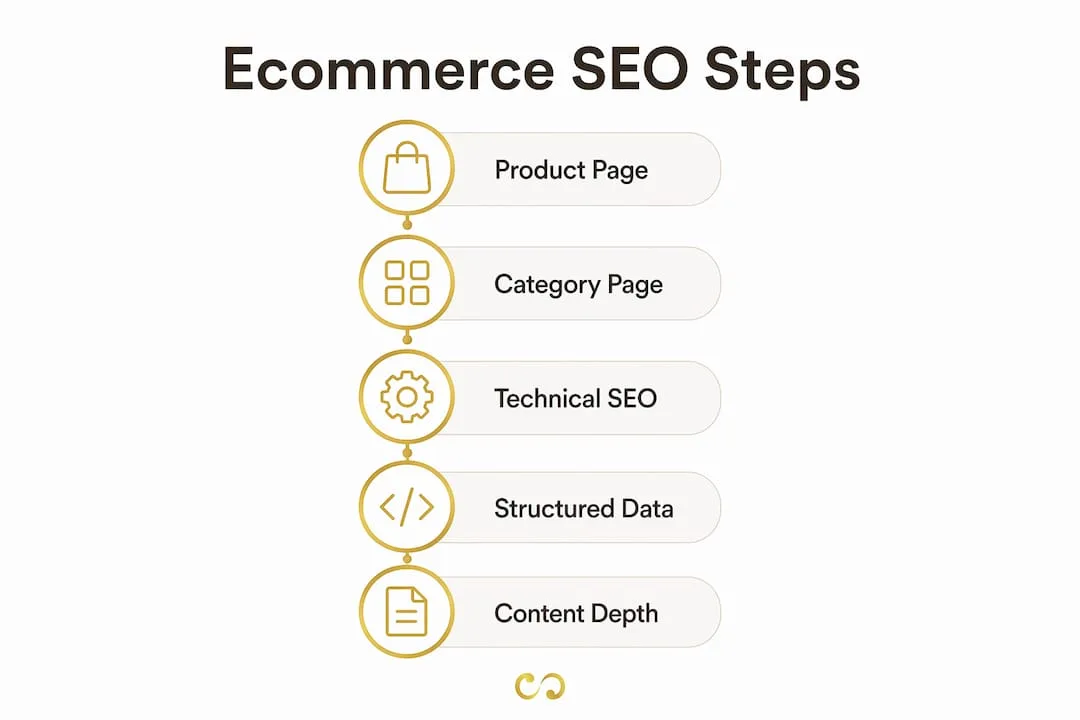
Category pages are the most underrated asset in ecommerce SEO. They capture high-volume, mid-funnel searches such as "women's running shoes" or "4K OLED TVs", where shoppers are comparing options rather than ready to buy one item. A well-optimised category page has a short editorial introduction, filtered navigation set up so it does not create duplicate URLs, and internal links to top products.
Technical SEO is the foundation everything else rests on. Fast, mobile-friendly, secure sites rank and convert better. Google's Core Web Vitals measure loading, responsiveness and visual stability, and ecommerce sites with large image catalogues often fall short without deliberate work.
Structured data gives search engines a machine-readable layer of product information. Schema markup for price, availability, ratings and product identifiers enables rich results, which make your listing stand out from competitors. Structured data and content depth both improve how search engines understand and present product listings.
Content depth rounds out the strategy. Buying guides, comparison articles, FAQs and blog posts reach shoppers earlier in their research and build topical authority that strengthens the whole domain.
Pro tip: Write a 100 to 150 word editorial introduction for every major category page. It gives Google context for the page's intent and gives shoppers a reason to trust your selection before they start filtering.
How does ecommerce SEO differ from traditional SEO?
Traditional SEO and ecommerce SEO share the same technical foundations, but the priorities split once you get past the basics.
| Dimension | Traditional SEO | Ecommerce SEO |
|---|---|---|
| Primary keyword focus | Informational and broad queries | High-intent, product-specific queries |
| Content type | Articles, guides, thought leadership | Product pages, category pages, buying guides |
| Conversion goal | Leads, email sign-ups, brand awareness | Direct product purchases |
| Scale challenge | Keeping content fresh | Managing thousands of product URLs and variants |
| Technical priority | Site speed and crawlability | Crawl budget, canonicalisation, faceted navigation |
| Measurement | Traffic, rankings, engagement | Revenue per organic session, conversion rate |
Scale is where ecommerce SEO gets complicated. Variant URLs multiplying out of control and crawl traps are among the most common technical problems on large catalogue sites. One product in five colours and four sizes can produce 20 separate URLs, most of them near-duplicates that dilute ranking signals and waste crawl budget. Canonical tags and deliberate internal linking consolidate those signals back to the main product page.
Faceted navigation, the filters that let shoppers sort by price, size or brand, adds another layer. Each filter combination can create a new URL. Without canonical tags, sensible robots.txt rules or noindex on low-value combinations, even a modest catalogue can present Google with a huge number of thin, repetitive pages.
Ecommerce content also has to serve merchandising. Product copy and FAQs are not just vehicles for keywords. They answer the specific questions that stop a shopper clicking "add to basket". Having to rank and convert at the same time is a pressure traditional content SEO rarely feels as sharply.
How to develop and implement an ecommerce SEO strategy
Building an ecommerce SEO strategy from scratch follows a logical order. Skipping early steps causes problems that grow later.
-
Run a technical SEO audit. Use Screaming Frog, Semrush or Google Search Console to find crawl errors, duplicate content, broken links and indexing gaps. Effective ecommerce SEO starts with an audit because you cannot prioritise fixes until you know what is broken.
-
Do buyer-intent keyword research. Focus on transactional and commercial investigation queries. "Buy noise-cancelling headphones under £200" signals far more buying intent than "best headphones", even though fewer people search for it. Map keywords to specific product and category pages rather than creating new content for every term.
-
Analyse competitor stores. Find the product categories your competitors rank for and you do not. Look at their category page structure, internal linking and the depth of their product descriptions. This shows gaps you can close faster than starting from nothing.
-
Improve site architecture. Every product should be reachable within three clicks of the homepage. A flat architecture spreads link equity more evenly across the catalogue and helps Google find new products quickly. Treat your website structure and design as a core SEO input, not an afterthought.
-
Keep optimising product and category pages. Update descriptions when specifications change, add FAQs based on customer questions and refresh category introductions each season. Algorithms update, competitors improve and stale content loses ground, so maintenance is part of the job.
-
Fix technical issues systematically. Prioritise Core Web Vitals, add canonical tags to variant URLs and submit updated sitemaps after major catalogue changes.
-
Measure with Google Analytics 4 and Search Console. Track organic revenue, click-through rate by page type and crawl coverage. Let this data decide where you invest next rather than going on instinct.
Pro tip: Filter Search Console to your top 20 category pages and check their average position weekly. A drop of three or more places is an early warning that a competitor has improved their page or that Google has reassessed yours.
Common ecommerce SEO challenges and how to overcome them
Every ecommerce store meets a predictable set of SEO obstacles. Knowing them in advance lets you build systems for them before they become ranking emergencies.
-
Faceted navigation and duplicate URLs. Crawl and indexing problems from faceted navigation are among the most common technical issues on mid-sized and large catalogue sites. The fix combines canonical tags pointing filter URLs to the main category page with robots.txt rules or noindex tags that keep low-value filter combinations out of the index. (Search Console's old URL Parameters tool has been retired, so this now has to be handled on the site itself.)
-
Out-of-stock products. Deleting a product page when it sells out throws away the ranking value it has built. Keep the page live and use product schema with an OutOfStock availability status for temporary gaps, or a 301 redirect to the closest in-stock alternative for permanently discontinued items. A 410 response is right only when a product will never return and there is no suitable replacement.
-
Duplicate content across large catalogues. Manufacturer descriptions used by many retailers create thin, duplicate pages that Google gives little weight. Write original copy for your top-selling products first, then work down the catalogue.
-
Balancing discovery and conversion on category pages. Category pages have to rank for broad searches and move shoppers on to product pages. A short editorial block at the top for SEO context, followed straight away by product listings, stops the page feeling like a blog post.
-
Keeping up with AI-driven search. AI features and structured data have changed how product listings appear in search results. Stores without complete product schema, including GTIN identifiers, pricing and availability, risk losing visibility in AI-powered shopping features to competitors with clean structured data.
Key takeaways
Ecommerce SEO works when buyer intent, site architecture and technical execution operate as one system rather than separate tactics.
| Point | Details |
|---|---|
| Definition and purpose | Ecommerce SEO optimises product and category pages to attract high-intent organic shoppers without paid ads. |
| Technical foundation | Site speed, mobile-friendliness and canonical tag management decide whether content improvements turn into rankings. |
| Buyer intent alignment | Map every keyword to a page type based on where the shopper is in the buying journey. |
| Ongoing measurement | Use Google Analytics 4 and Search Console to track organic revenue and crawl coverage, not just traffic. |
| Catalogue scale management | Canonical tags and deliberate internal linking stop variant URLs diluting your most important product pages. |
Why most ecommerce stores get SEO backwards
The pattern I see most often is stores treating SEO as a content problem when it is an architecture problem first. They publish buying guides and blog posts while their category pages are full of duplicate URLs from faceted navigation and their crawl budget is spent on filter combinations that will never rank for anything useful.
The second mistake is measuring vanity metrics. Organic sessions feel like progress, but organic revenue per session tells you whether the traffic actually matches your catalogue. A store can grow organic traffic steadily and still see flat revenue if it is ranking for informational searches that attract researchers rather than buyers.
The third thing most retailers miss is the merchandising layer. Good product pages bring together specs, FAQs and trust signals to convert as well as rank. SEO gets the shopper to the page, and the page has to close the sale. Both goals need the same content investment, and treating them as separate workstreams is where many ecommerce SEO programmes stall.
My honest recommendation: fix your technical foundation and category page architecture before you write a single new piece of content. The returns come faster, last longer and make every later content investment work harder. Track your marketing metrics by page type, not just across the whole domain, and you will know exactly where to focus next.
Pawan
Ready to grow your store's organic visibility?
LOOM Brand Designs builds ecommerce SEO strategies that connect site architecture, technical performance and buyer-intent content into one growth plan. Whether you are launching a new store or fixing one that has plateaued, we bring the same care to your catalogue that large retailers apply to theirs.
Explore our ecommerce website design services to see how a properly structured site becomes the base for steady organic growth. For stores ready to invest in a dedicated organic programme, the Brand Growth SEO/AEO Strategy package covers the keyword research, technical audits and content frameworks your catalogue needs to compete in search.
FAQ
What is ecommerce SEO in simple terms?
Ecommerce SEO is optimising an online store's product pages, category pages and technical structure so search engines rank it higher and shoppers find it without paid advertising. It focuses on high-intent searches from people who are ready to buy.
How long does ecommerce SEO take to show results?
Most stores see measurable ranking improvements within three to six months of consistent technical and content work. Competitive categories in established markets can take longer, while niche catalogues with little competition often move faster.
How does faceted navigation hurt ecommerce SEO?
Faceted navigation can create thousands of near-duplicate filter URLs that use up crawl budget and dilute ranking signals. The fix is canonical tags pointing filter pages back to the main category page, plus robots.txt rules or noindex tags for low-value filter combinations.
What should I do with out-of-stock product pages?
Keep the page live with an OutOfStock availability status for products that are temporarily unavailable. For permanently discontinued items, use a 301 redirect to the closest in-stock alternative, or a 410 response only if there is no suitable replacement and the page has no ranking value worth keeping.
Is ecommerce SEO different from regular SEO?
Yes. Ecommerce SEO puts transactional keywords, crawl budget management, canonicalisation of product variants and content that converts at the centre of the work. The technical demands of large product catalogues make it a distinct discipline from content-led SEO.
The Hashtag Loom