

TL;DR:
- Creative direction is the strategic oversight of every brand element so the identity stays unified across channels. It guides visual, written and experiential decisions, building recognition, trust and emotional connection. Strong creative direction prevents fragmented branding and gives you an edge in crowded markets.
Creative direction is the strategic leadership of all the creative elements in a brand or project, so the result is a unified, consistent identity that speaks to its audience. It sits above individual design or copywriting decisions. A creative director shapes how a brand looks, sounds and feels on every channel, whether that is a Nike campaign or an Apple product launch. Understanding the role is the difference between a brand that gets noticed and one that gets remembered. For creative professionals and business leaders, understanding creative direction means understanding how your brand competes.
What is creative direction and why does it matter?
Creative direction is the practice of overseeing a brand's visual, written and experiential elements so they all serve one clear strategic goal. It is a discipline that touches everything a business produces creatively, not a single task. Creative directors lead teams of designers, photographers, copywriters and motion artists to produce a cohesive result across different media. That scope makes creative direction the link between a brand's business goals and its public face.

The role exists in music, film, fashion, advertising, digital media and software. Each needs the same core skill: translating a brand's purpose into a creative language audiences recognise straight away. Apple's clean minimalism, Spotify's bold colour blocking and Patagonia's raw outdoor photography all come from deliberate creative direction. None of them happened by accident.
When visual, written and experiential choices all point at the same objective, a brand has presence. When they do not, it has noise.
What does creative direction cover?
Creative direction spans a wide range of decisions and leadership duties. A creative director's core responsibilities include concept development, guiding creative tone across channels, leading the team, working with clients and overseeing the brand. These duties look much the same at an advertising agency, a tech company or a fashion house.
The practical work includes:
- Concept development: Defining the central idea behind a campaign, product launch or brand refresh before any asset is made.
- Visual identity oversight: Approving colour palettes, typography, photography style and layouts across all brand materials.
- Messaging alignment: Making sure copy, taglines and brand voice tell the same story as the visuals.
- Team leadership: Steering designers, videographers, copywriters and UX designers towards a shared vision.
- Cross-channel consistency: Reviewing work across social media, web, print and video to catch drift from the brand standard.
Creative direction in advertising looks different from creative direction in fashion, but the leadership structure is the same. At an advertising agency such as Wieden+Kennedy, a creative director guides campaign concepts for clients. In fashion, the creative director sets the whole seasonal aesthetic, from the runway to the shop floor. In digital media, creative direction governs how a brand feels on Instagram compared with LinkedIn or YouTube.
Pro tip: Use a shared visual brief in Figma or Adobe Creative Cloud at the start of every project. One reference point stops creative drift before it begins.
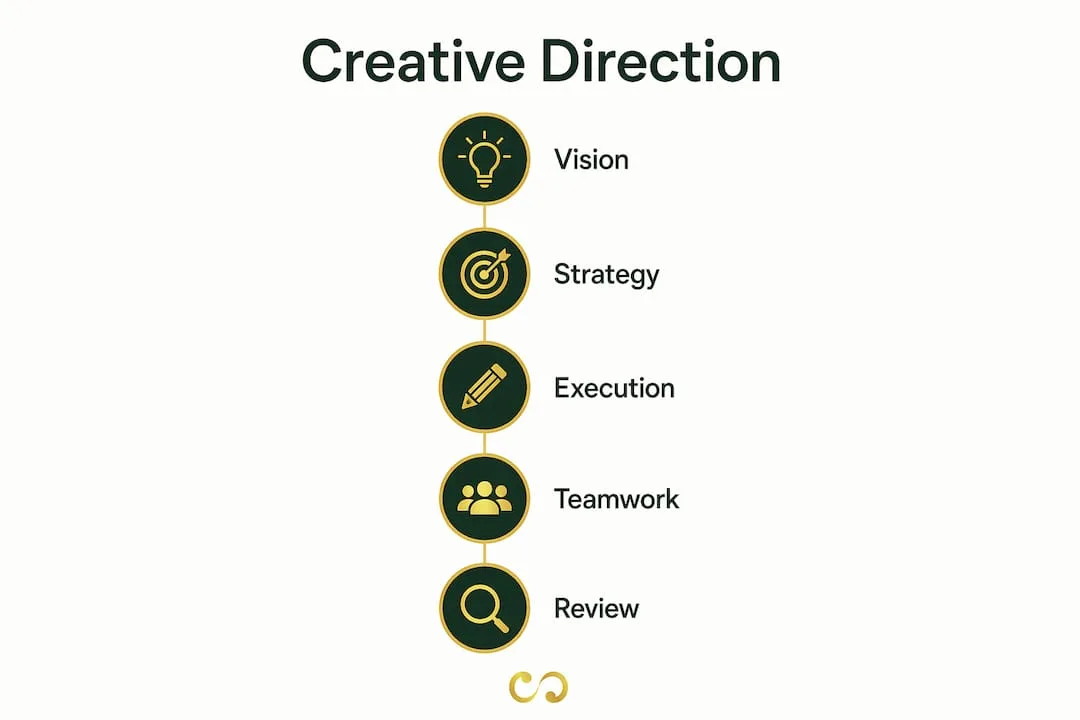
Why does creative direction matter for brand identity?
Strong creative direction builds recognition, trust and loyalty. It keeps messaging and assets consistent, and consistency shapes how customers see you and how well your marketing works. Consistency is a business asset, not just a matter of taste. Customers who recognise a brand instantly are more likely to trust it, buy from it and recommend it.
The value of creative direction is clearest when it is missing. Brands that let individual designers, marketers or agencies make disconnected decisions end up with fragmented identities. One campaign feels corporate, the next feels playful, and the website looks nothing like the social feed. Customers notice the inconsistency even if they cannot name it, and it wears away trust.
How strong creative direction protects and builds a brand:
- It creates instant recognition. A consistent visual and verbal identity means customers know it is you before they read your name.
- It builds emotional connection. Storytelling guided by a clear vision creates feelings, not just impressions.
- It ties creative work to business goals. It keeps the team focused on work that serves revenue, growth and retention.
- It gives you an edge. In crowded markets, a brand with a clear creative identity stands out from competitors with generic visuals and messaging.
In digital and social media marketing, creative direction also shapes user experience so it is both attractive and functional, which keeps audiences engaged and coming back. Strong brand guidelines are the written record of creative direction decisions, making them repeatable across teams and over time.
How does creative direction differ from art direction?
The two roles are related but different. Creative direction is strategic oversight and leadership across all creative work. Art direction focuses on execution and design detail. Creative directors own the vision and concepts. Art directors turn those concepts into finished designs and oversee production.
| Role | Focus | Scope | Decision level |
|---|---|---|---|
| Creative director | Vision, strategy, brand narrative | All creative disciplines | High-level, cross-channel |
| Art director | Visual execution, layout, production | Design and photography | Mid-level, project-specific |
| Graphic designer | Asset creation, visual craft | Individual deliverables | Execution level |
| Copywriter | Written messaging, tone of voice | Text-based content | Execution level |
The difference matters in practice. Imagine a creative director at a beauty brand deciding the brand should feel intimate and community-led. The art director then decides how that feeling becomes a specific Instagram grid or packaging design, and the graphic designer produces the final assets. Each role depends on the one above it for direction.
Mixing these roles up causes real problems. Clients who hire an art director expecting creative direction get excellent execution without strategic guidance. Teams that give a graphic designer creative director responsibilities get beautiful assets that do not connect to a bigger brand story. Being clear about the role prevents both.
How can businesses put effective creative direction in place?
Effective creative direction needs a clear vision tied to brand strategy, strong leadership and processes that keep messaging consistent. Successful brands set their creative direction early and keep refining it as markets and audiences change. It is an ongoing practice, not a one-off set-up.
Steps businesses use to build and maintain it:
- Write down your creative vision. Document the tone, visual style and storytelling approach before any assets are made. This becomes your creative brief template.
- Name one decision-maker. Every creative team needs one person with final approval. Committees produce compromise, not vision.
- Build a brand style guide. Include typography, colour systems, photography direction and voice guidelines. Tools like Figma and Adobe Creative Cloud make it easy to share and keep versions in order.
- Audit existing assets regularly. Review your website, social media and print materials every quarter to find where the brand has drifted.
- Tie creative output to business metrics. Track how creative changes affect engagement, conversion and brand recall. Creative direction that does not serve business goals needs revisiting.
Monitoring matters as much as planning. Marketing campaign examples from leading brands show that the strongest campaigns rest on creative direction held steady over years, not months. Brands that treat it as a one-off project lose their edge quickly.
Pro tip: Hold a quarterly creative review with your team. Compare new assets against the original brand brief. Drift is easier to correct early than after a full campaign has launched.
Key takeaways
Creative direction is the strategic foundation that decides whether a brand's visual and verbal identity builds lasting recognition or fades into the background.
| Point | Details |
|---|---|
| Creative direction defined | The strategic leadership of all visual, written and experiential brand elements towards one identity. |
| Scope of the role | Creative directors oversee concept development, team leadership, messaging and cross-channel consistency. |
| Importance for brands | Consistent creative direction builds recognition, trust and emotional connection. |
| Creative versus art direction | Creative direction sets vision and strategy; art direction carries it out in specific designs. |
| Implementation steps | Write down a creative vision, name a decision-maker, build a style guide and audit assets regularly. |
Why creative direction is the most undervalued role in branding
Most businesses I work with know they need good design. Far fewer understand that good design without creative direction is just decoration. The difference shows quickly. A brand can have a talented graphic designer, a skilled copywriter and a solid web developer and still produce a fragmented identity that confuses customers. That is almost always a creative direction problem, not a talent problem.
Fashion makes this very visible. Creative directors at big fashion houses change often, and some leave after only a short time. That churn shows how much pressure brands put on the role to deliver quickly, and how hard it is to get right. When a creative director leaves, the brand often loses its coherent identity with them.
The digital marketing trends shaping 2026 make strong creative direction more urgent. Audiences move faster, channels multiply and the window to make an impression keeps shrinking. Brands that invest in clear creative leadership now will have a structural advantage over those that treat it as optional. The businesses I see doing well are the ones where creative direction is a defined role with real authority, not a vague responsibility shared by a committee.
Pawan
How LOOM Brand Designs can build your creative direction
LOOM Brand Designs works with creative professionals and business leaders who need more than good-looking assets. They need a clear, consistent creative identity that works on every channel. Our team focuses on brand identity and graphic design grounded in deliberate creative direction, not guesswork. From logo systems to full campaign visuals, every deliverable connects back to one brand strategy. If you are starting from scratch, the basic branding package gives you the creative foundation your business needs to compete.
FAQ
What is creative direction in simple terms?
Creative direction is the strategic leadership of all the visual and messaging elements in a brand or project. It makes sure every creative output tells the same story and builds a consistent identity.
How does creative direction differ from graphic design?
Graphic design produces individual visual assets. Creative direction sets the strategic vision that guides how those assets should look and feel across every channel.
What does a creative director do day to day?
A creative director develops concepts, leads creative teams, reviews assets for brand consistency and lines creative output up with business goals. The role spans strategy, leadership and quality control.
Why is creative direction important for marketing?
It makes sure every marketing asset, from social posts to video ads, tells a consistent brand story. That consistency builds recognition and trust over time.
Can small businesses benefit from creative direction?
Yes. Creative direction prevents the fragmented identity that comes from one-off design decisions. A clear creative vision makes every pound of marketing spend work harder.
The Hashtag Loom