TL;DR:
- A well-designed logo builds credibility and trust from the first glance.
- Simplicity, thoughtful colour choices and consistency make a logo memorable and effective.
- Professional design gives you a versatile, scalable logo that supports your brand for years.
Your logo is often the first thing a potential customer notices about your business, and first impressions form quickly. For founders and small business owners, that leaves very little time to communicate trust, personality and value. A well-crafted logo can make your brand feel established and credible before you say a word, because people judge businesses partly on how they look. This guide covers what makes logos work, a set of design ideas, a comparison of styles and practical advice on budget, so you can move forward with confidence.
Key takeaways
| Point | Details |
|---|---|
| First impressions are fast | Your logo has a moment to make a strong impression on potential customers. |
| Simplicity helps recall | Simple logos are easier to remember and recognise over time. |
| Colour shapes trust | Colour choices, such as blue for trust, affect how credible and recognisable you seem. |
| Consistency protects your investment | Using your logo the same way everywhere avoids rework and builds recognition. |
What makes a logo memorable and effective?
What separates memorable logos from forgettable ones? A logo is not just a pretty graphic. It is a shortcut your audience uses to decide whether to trust you. Understanding the thinking behind effective logos helps you make better creative decisions from the start.
The core qualities of a strong logo:
- Simplicity: Simple logos are easier to remember and recognise on every platform.
- Colour: Blue is widely associated with trust, while red signals energy and urgency. Choosing a palette is a strategic decision.
- Scalability: A good logo looks sharp on a business card and a billboard. If it falls apart at small sizes, it is not working hard enough.
- Relevance: Your logo should suit your industry and audience. A law firm and a food truck have very different visual needs.
- Consistency: Using your logo the same way at every touchpoint builds recognition over time.
As the designer Paul Rand put it, a logo does not sell directly; it identifies. Its job is to make a company recognisable and memorable.
Understanding logo design basics before you start saves costly revisions later. Colour plays a big part in recognition, so every design choice carries real business weight. The role of logos in branding goes well beyond looks: a logo is a visual anchor customers return to again and again.
Pro Tip: Test your logo in black and white first. If it still communicates clearly without colour, it is built on a strong foundation.
Seven logo design ideas for immediate inspiration
With those criteria in mind, here are seven logo styles to spark ideas. Different types serve different goals, so match the style to your business model.
- Minimal wordmark: Your business name set in a clean, custom typeface. Think Google or FedEx. Best when name recognition is the main goal.
- Symbolic icon: A standalone graphic that represents your brand. Apple's apple and Twitter's former bird are classic examples. Good for businesses planning to grow internationally.
- Negative space logo: A design that uses the space around or within shapes to reveal a second image. It rewards attention and leaves a clever, memorable impression.
- Vintage badge: Circular or shield-shaped designs with layered typography. Ideal for craft breweries, barbers or any brand leaning on heritage and authenticity.
- Abstract mark: A geometric or fluid shape that does not depict a literal object but conveys a feeling. Pepsi and Nike use this approach to suggest energy and movement.
- Mascot logo: A character or illustrated figure that gives your brand a face. Suits family-friendly businesses, food brands and sports teams that want a relatable identity.
- Dynamic logo: A logo system that changes colour, shape or layout depending on context, as Google does with its Doodles. It keeps things fresh while holding on to core recognition.
The best logo for your business is not the most creative one. It is the one your customers remember and trust.
Following our branding cohesion tips across all your materials makes sure your chosen style pays off over time. Each of these seven styles can work well when it is applied consistently and with purpose.
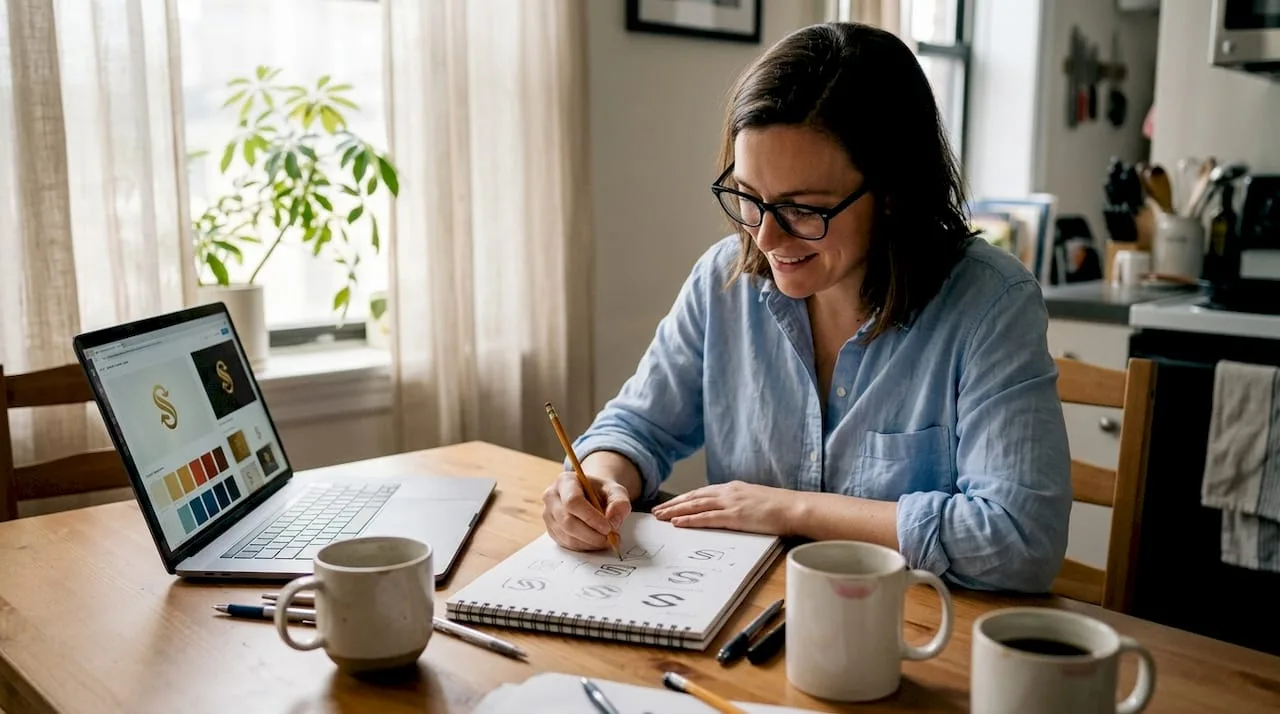
Pro Tip: Sketch five rough versions of your idea before opening any software. Hand-drawn drafts show you what feels right before you invest time in digital tools.
Comparing logo design styles
To narrow the field, here is how the main styles compare.
| Logo style | Emotional effect | Best-suited industries |
|---|---|---|
| Wordmark | Professional, trustworthy | Law, finance, consulting |
| Pictorial mark | Memorable, iconic | Tech, retail, lifestyle |
| Combination mark | Versatile, balanced | Startups, agencies, services |
| Abstract mark | Modern, energetic | Fitness, tech, innovation |
| Mascot | Friendly, approachable | Food, education, entertainment |
| Emblem | Prestigious, authoritative | Government, schools, luxury |
| Dynamic logo | Adaptable, forward-looking | Media, digital platforms |
Because people judge credibility partly on design, the feeling your logo creates matters as much as the image itself. Colour reinforces it: blue's association with trust is one reason it is so common in finance and healthcare.
Before you commit to a style, ask yourself:
- Do I want the brand to feel playful or authoritative?
- Will the logo appear mostly on screens or in print?
- Is my business name short and strong enough to carry a wordmark?
- Do I need a version that works without colour?
- Am I building a personal brand or a company brand?
Understanding colour in branding helps you make choices that connect emotionally with your audience. Pair that with a commitment to brand consistency and your logo becomes a real business asset rather than decoration.
Cost, DIY and professional tips for small business logos
Once you have your inspiration, think about the routes available for creating the logo. Costs vary widely depending on how much customisation, strategy and file preparation you need. DIY and AI tools are useful for early concepts, and keeping things consistent from the start avoids paying to fix problems later.
| Option | Relative cost | What you get | Best for |
|---|---|---|---|
| DIY tools (Canva, Looka) | Free or low cost | Templates, basic customisation | Testing ideas, tight budgets |
| Freelance designer | Moderate | Custom design, limited revisions | Small businesses at an early stage |
| Branding studio | Higher | Full brand identity, complete file packages | Growing businesses |
Common logo mistakes small businesses make:
- Using raster files (such as JPG) instead of vector files (such as SVG or AI), which makes logos blurry when scaled up.
- Skipping brand guidelines, so the logo is used inconsistently across platforms.
- Choosing trendy fonts that date quickly and force a redesign within a few years.
- Ignoring how the logo looks on dark backgrounds or in a single colour.
- Forgetting about file preparation, which can add unexpected costs after the design is finished.
A solid branding checklist helps you avoid these pitfalls before they cost you money. Free tools are great for generating ideas and testing directions, but a professional designer makes sure your final files are production-ready and that you have clear rights to use them.
Pro Tip: Always ask for your logo in at least three formats: a vector file for print, a transparent PNG for digital use and a simplified favicon for your browser tab.
Why creativity alone is not enough
Many small business owners assume their logo is struggling because it is not creative enough. In our experience working with founders across industries, the real problem is almost always inconsistent use, not a lack of originality.
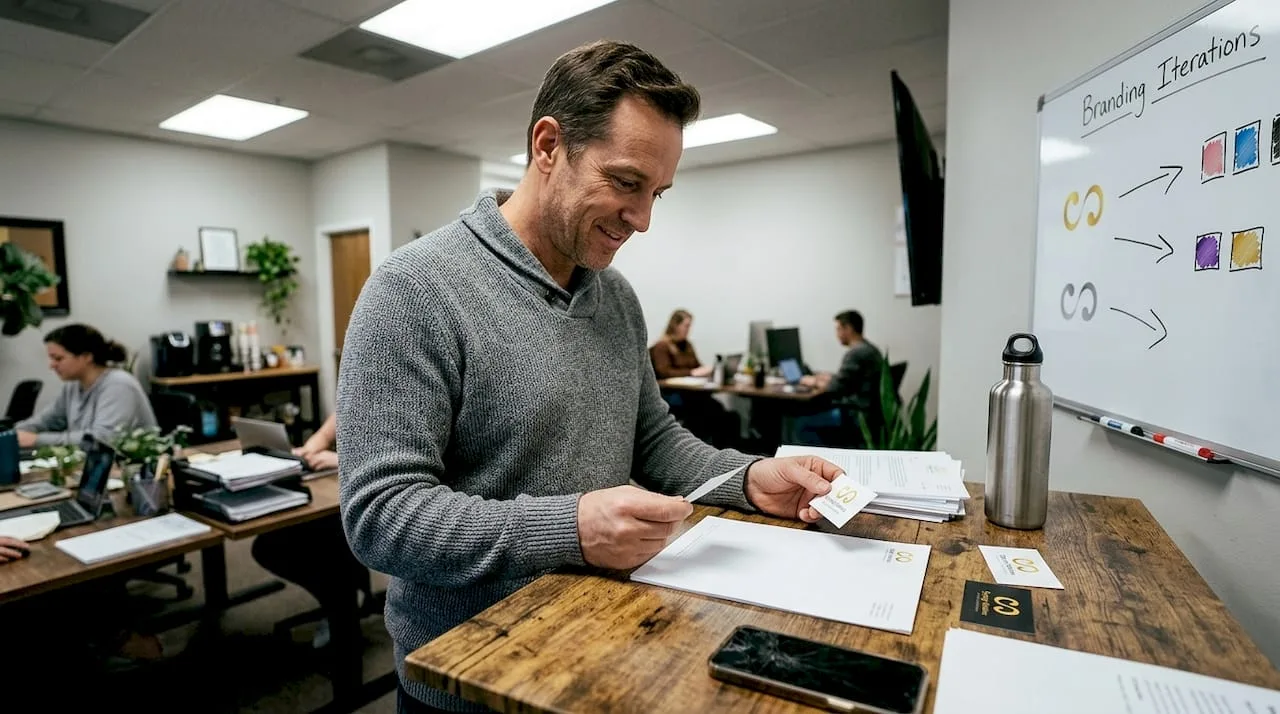
A beautifully designed logo that looks different on your website, business cards and social profiles sends mixed signals. It quietly suggests disorganisation, even when your product or service is excellent. Consistent use pays off over time because you are not constantly patching and correcting visual errors.
Overly complex logos are another trap. Intricate designs that look stunning in a presentation often fall apart at small sizes or in single-colour print. Simplicity is not a creative compromise. It is a strategic advantage.
The brands that win over the long term are not always the ones with the most original logos. They are the ones that apply their logo with discipline at every customer touchpoint. That discipline, combined with consistent branding, is what turns a logo from a graphic into a real business asset.
Bring your logo ideas to life with expert help
Turning inspiration into a polished, professional logo takes more than good ideas. It takes technical skill, strategic thinking and a clear process.
At LOOM Brand Designs, we help small business owners move from concept to finished brand identity with confidence. Our basic branding package is built for founders who need a strong foundation, while our standard branding package delivers a complete identity system ready for growth. Our professional graphic design team handles everything from first sketches to final files, so your logo works well wherever it appears. Book a consultation and take the guesswork out of your brand's first impression.
Frequently asked questions
What is the most important factor in logo design for small businesses?
Simplicity and consistency. Simple, consistently used logos are easier to remember and build trust faster on every platform you use.
How much should I budget for a small business logo?
It depends on how much customisation and strategy you need. DIY tools cost little or nothing, a freelancer sits in the middle and a branding studio costs more but delivers a full identity. Decide what you need the logo to do, then choose the route that fits.
Do the colours in my logo really matter?
Yes. Colours carry associations, such as blue for trust and red for energy, and a consistent palette helps people recognise your brand.
Should I use a free logo maker or hire a designer?
Free and AI-powered tools are excellent for exploring early ideas, but a professional designer makes sure your final logo is production-ready and consistent across every use.
How can I keep my logo consistent everywhere?
Save your logo in several file formats, including vector and PNG, and create a simple one-page brand guide that sets out approved colours, sizes and usage rules for every platform.
The Hashtag Loom