
TL;DR:
- Graphic design is the arrangement of visual elements to communicate a message across different media. Most design types are defined by their deliverables and channels, and many projects span several categories. Versatile skills and a broad portfolio make you more employable.
Graphic design is the art of arranging visual elements such as typography, imagery and layout to communicate a specific message to a specific audience. The types of graphic design are best understood as specialisms defined by deliverables and communication channels, not by artistic style alone. Tools like Adobe Creative Cloud, Figma and Canva each serve different disciplines, from brand identity to motion graphics. Knowing which category suits your interests is the quickest way to build a focused, marketable skill set.
1. What are the most common types of graphic design?
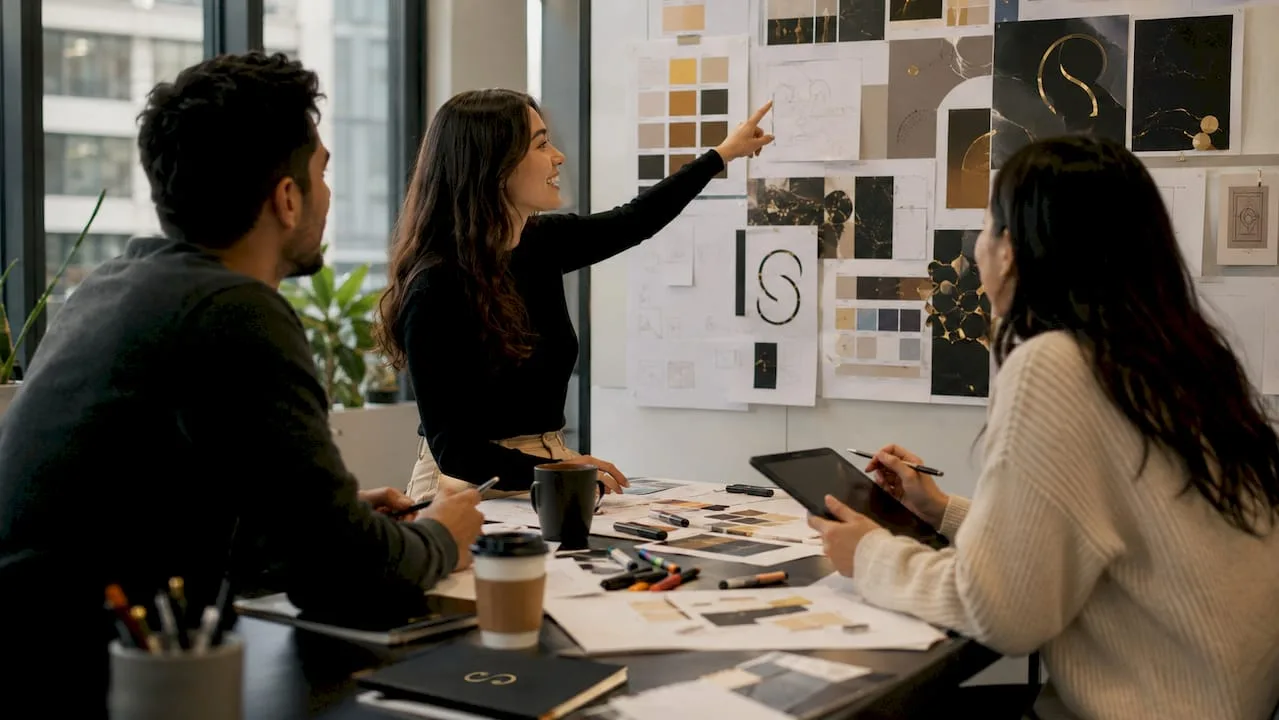
Graphic design specialisms fall into roughly ten established categories, each defined by what it produces and the channels it serves. The boundaries are loose. A single project can span three or four types at once.
The core categories every aspiring designer should know:
- Brand identity design: Logos, colour palettes, typography systems and brand guidelines. The main deliverable is a repeatable visual system that works at every touchpoint.
- Marketing and advertising design: Social media graphics, banner ads, email templates and print campaigns. The goal is persuasion and conversion.
- Editorial design: Magazine layouts, book covers, annual reports and long-form content. This type puts readability and visual hierarchy first.
- Packaging design: Product labels, boxes and retail displays. Packaging works as a repeatable design system that must stay consistent across many product formats.
- Web and digital design: Landing pages, website layouts and digital ads. This type bridges visual communication and technical execution.
- UI/UX design: App interfaces, dashboards and interactive prototypes. UI focuses on visual components; UX focuses on user flow and experience.
- Motion graphics: Animated logos, explainer videos, title sequences and social reels. Adobe After Effects is the industry standard here.
- Environmental design: Wayfinding systems, trade show stands, retail interiors and signage. This type works at physical scale.
- Typography design: Custom typefaces, lettering and type-led layouts. Typography is both a discipline in its own right and a core skill in every other type.
- Illustration: Custom illustrations for editorial, brand, packaging and digital media. Illustration adds a hand-made or conceptual layer that photography cannot.
Pro tip: When you look at a design project, ask what the deliverable is and where it will live. The answer nearly always tells you which category it belongs to.
2. How these design categories apply across industries
Different industries prioritise different disciplines. Knowing which matter most in your target industry is a real career advantage.
Startups often need brand identity, web design, UI/UX, pitch decks, marketing design, data visualisation and motion graphics. The mix shifts with company stage. Early-stage startups focus on brand identity and web design first. Growing companies add motion graphics and data visualisation as their content needs expand.
Retail and consumer goods brands follow a different path. They start with brand identity, then extend it into packaging, environmental design and digital advertising. One brand system has to hold together across a product label, a shelf display, a website and an Instagram ad. That consistency is what graphic design drives for business growth.
How industry demand maps to design type:
- Technology companies: UI/UX, web design, motion graphics, data visualisation
- Consumer packaged goods: Brand identity, packaging, marketing design
- Publishing and media: Editorial design, typography, illustration
- Healthcare: Information design, data visualisation, environmental wayfinding
- Hospitality and retail: Environmental design, brand identity, marketing collateral
- Charities and education: Editorial design, marketing design, infographics
Tech companies invest heavily in UI/UX because their product is the interface. Consumer brands invest in packaging because the shelf is their main sales channel. Matching your specialism to industry demand is a practical way to build marketing materials that actually perform.
3. What visual and technical skills support each design type?
Visual communication relies on core elements including typography, colour, layout, photography, icons, charts and diagrams. Every design type uses some of these, but the weight given to each shifts a great deal by discipline.
| Design type | Primary visual skills | Key tools |
|---|---|---|
| Brand identity | Typography, colour, logo construction | Adobe Illustrator, Figma |
| Marketing design | Layout, colour, image editing | Adobe Photoshop, Canva |
| Editorial design | Grid systems, typography, hierarchy | Adobe InDesign |
| Packaging | 3D visualisation, print production | Adobe Illustrator, dieline templates |
| Web and digital | Layout, colour, responsive grids | Figma, Adobe XD |
| UI/UX | Interaction design, wireframing, usability | Figma, Sketch |
| Motion graphics | Animation, timing, compositing | Adobe After Effects, Cinema 4D |
| Environmental | Large-format print, spatial thinking | Adobe Illustrator, AutoCAD |
| Illustration | Drawing, digital painting, composition | Adobe Illustrator, Procreate |
UI/UX design needs more than visual skill. It demands an understanding of usability, interaction limits and user flow. A UI designer who cannot think about how someone moves through a screen will produce beautiful work that fails in use.
Motion graphics adds time, which static design does not have. Designers have to think about pacing, transitions and how a message unfolds over a few seconds. That is a very different way of thinking from laying out a page.
Pro tip: Build your portfolio to show one visual identity adapting across at least three media. A logo, a social post and a web banner from the same brand system tell a hiring manager far more than three unrelated projects.
4. How to find the best graphic design type for your goals
Choosing a specialism is not a permanent decision. Most working designers build skills across several types because real projects rarely stay inside one category. The aim is to find a main focus and build outwards.
Start with these questions:
- Which deliverables excite you? If you love seeing a finished product on a shelf, packaging design fits. If you prefer things that move, motion graphics is the direction.
- Do you prefer working alone or with others? UI/UX designers work closely with developers and product managers. Illustrators often work more independently.
- Do you want to work in print, digital or physical space? Environmental design needs spatial thinking. Digital design needs screen-based technical knowledge.
- Which industries interest you? Your industry preference often decides which design types are most in demand for you.
Many degree courses, such as the BA Graphic and Media Design at London College of Communication, now cover a wide range of disciplines, from editorial and typography to interaction and motion. That reflects how the field works. Designers who can move between visual identity, digital media and motion are more valuable than those confined to one narrow specialism.
Practical experience matters more than coursework alone. Build a portfolio that shows design thinking across media and you will attract clients and employers who need consistency across brand, web, social and motion. Graphic designers create logos, websites, ads, packaging and more, often crossing print and digital in a single career. That versatility is a strength, not a distraction.
Key takeaways
Graphic design types are defined by deliverables and channels, not artistic style, and choosing a specialism based on industry demand and personal interest is the most direct route to a focused design career.
| Point | Details |
|---|---|
| Types are defined by deliverables | Each category is shaped by what it produces and where that work lives. |
| Boundaries overlap in practice | Most real projects span two or more design types, so cross-type skills matter. |
| Industry shapes demand | Tech companies prioritise UI/UX; consumer brands prioritise packaging and identity. |
| Core tools vary by type | Figma leads for UI/UX, After Effects for motion and Illustrator for identity. |
| Portfolios should show adaptability | One brand system shown across several formats signals professional versatility. |
Why I think most aspiring designers specialise too narrowly too soon
Most design advice tells you to pick a lane and stay in it. I disagree, especially early in a career.
Every strong brand project I have seen needs at least three design types working together. A brand identity without a web presence is incomplete. A website without motion or social assets loses reach. Packaging without a consistent digital counterpart confuses customers. The designers who get the best projects can hold a visual system together across all of those touchpoints, not just one.
Depth still matters. A designer who knows motion graphics at a professional level will beat a generalist on a motion brief. The practical answer is to go deep in one type and wide enough in two or three neighbouring types to collaborate without friction. A brand identity designer who understands web layout and basic motion will rarely struggle for work.
The field is also changing. Generative design, AI-assisted layout and interactive 3D are reaching every category, and demand for visual content in marketing keeps growing. Designers who treat their specialism as a fixed identity will be outpaced. Those who treat it as a home base for continuous learning will not.
Focus on communication goals first. The type of design is just the tool you use to get there.
Pawan
LOOM Brand Designs can bring your design vision to life
Whether you are building a brand from scratch or extending an existing identity across digital and print, the right design partner changes the outcome.
LOOM Brand Designs offers graphic design services across brand identity, marketing collateral, web design and motion graphics. Every project is built around your communication goals, not a template. If you are ready to establish a visual identity that holds together on every channel, the Basic Branding Package is a direct starting point. For businesses that need a full digital presence, we also offer website design and development and video editing and design. See the work for yourself in the LOOM Brand Designs portfolio.
FAQ
What is graphic design, exactly?
Graphic design is the art and profession of arranging visual elements such as typography, imagery and layout to communicate a message to a specific audience. It spans print, digital, environmental and motion media.
How many types of graphic design are there?
There are roughly ten established types: brand identity, marketing design, editorial, packaging, web and digital, UI/UX, motion graphics, environmental design, typography and illustration.
What is the difference between UI design and graphic design?
Graphic design focuses on visual communication in static or print media. UI design applies the same visual skills to digital interfaces but also needs knowledge of usability, interaction limits and user flow.
Which type of graphic design is best for beginners?
Brand identity and marketing design are the most accessible starting points. Both use core skills like typography, colour and layout, and both are needed in almost every industry.
Do graphic designers need to specialise in one type?
Specialising builds depth, but most working designers develop skills across two or three neighbouring categories. Portfolios that show one visual identity adapting across brand, web and social media tend to attract more clients than single-type work.
The Hashtag Loom